
Seed Oils: Facts > Fear
The information online about seed oils is polarizing, and it’s everywhere.
Wellness influencers saw an opportunity to incite fear and increase engagement by cherry picking data and ran with it. And it worked. But what is fact and what is just simply fear?
I am so grateful to Growing a Healthier America, an organization helping families feel confident about their food by connecting real stories with reliable facts, who have sponsored this post so I can clear up some misconceptions about seed oils for you today.
The words “toxic,” “inflammatory,” “poison,” and “avoid at all costs” get thrown around a lot when influencers refer to seed oils.
It’s frustrating and not rooted in science.
But how did it get this bad…
I polled my audience and asked what confused them about seed oils and the best response I got simply said:
EVERYTHING.
And it’s so true. Even as a dietitian I am scratching my head wondering - why are we even having this conversation??
As a registered dietitian, I have been in practice for over 15 years and have worked across most spaces from acute and sub acute care to retail spaces and private practice within the field.
Helping people understand how to care for their hearts, a pretty important organ in our bodies, is part of my job.
Helping people understand how to cook to decrease risk for heart disease is part of my job - always has been.
NEVER in my 15 years in practice have I thought to suggest to someone to use a saturated fat to cook to improve heart health over proper (temperatures matter) use of an oil like canola or another “seed.”
However, I do know that science evolves and questions asking for understanding are helpful and providing education is so important, so I am glad you are here and I would love to break this down for you.
The messaging is confusing.
Loud, dramatic nutrition claims often go viral, while actual science is just not as sexy.
So let’s poke some holes into the big arguments and allow for some critical thinking to take over.
First: What even are seed oils & are they connected to the “obesity crisis” (heavily air quoted)
Sunflower, safflower, soybean, canola, corn these are all seed oils by definition and often found in homes and restaurants for cooking. They are oils extracted from seeds aka seed oils.
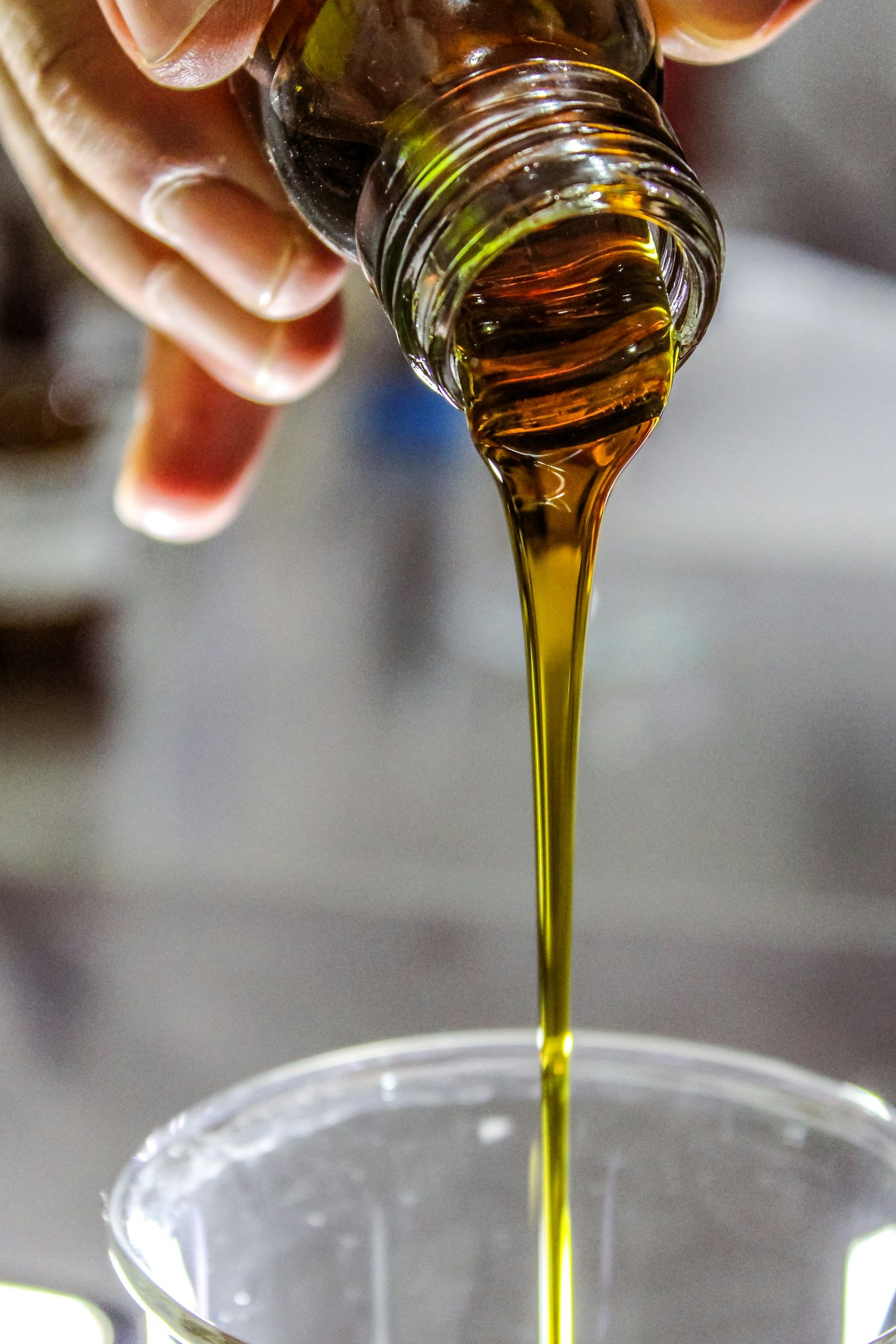
And oils are fats.
There are three macronutrients that provide energy or calories to the foods we eat.
Protein, carbohydrates and fats.
Fats are 9 kcals/gram vs protein and carbs clocking in around 4.
So therefore fats are much more calorically dense than carbs and protein, more than double.
So what does that mean? It means that consumption of fats leads to a larger consumption of calories. Using something like oil without measuring or understanding portions can add more calories than intended to a meal or snack. An excess of what your body needs calorically can cause weight gain.
One of the biggest arguments about seed oils in the media is that they lead to weight gain and are part of the “obesity crisis” in America, but is it the seed oil or is it the quantitiy of consumption and a lack of education and understanding?
Olive oil also has a heavy caloric impact.
It is also important to note that fats are essential for hormone production, energy, brain health, and nutrient absorption plus they add flavor to your food. They are in fact needed in our diet and the amount that you and I need are definitely different but we both need them.
So again, when people blame seed oils for weight gain or poor health, we need to zoom out:
Excess calories cause weight gain.
Fats contain more calories per gram than carbs or protein.
Too much of any fat can contribute to excess calorie intake, seed oil or not.
This isn’t fear.
This is context.
Seed oils are high in omega-6 polyunsaturated fats, especially linoleic acid, which is: an essential fatty acid (your body needs it and doesn’t make it) used in cell membranes, skin health, brain function, and hormone signaling.
A common internet claim about these omegas is that: “Omega-6 causes inflammation.”
Conveniently influencers have taken one study where they pumped rodents, not humans (big piece of the story here!) over time with more seed oil than you could possibly imagine aka you would not ever consume that and the rodent died. There are clear holes here but when you hear “A RAT ATE SEED OILS AND DIED” I understand why you might be concerned!
So again, my answer here is add a little more education. And remember, it’s always the dose that makes the poison.
And my first recommendation, I dont recommend drinking any type of oil or butter for that matter, ever. Just felt the need to add that.
Now, Omega-6 intake does not increase inflammation. Research supports this.
“The main charge against omega-6 fats is that the body can convert the most common one, linolenic acid, into another fatty acid called arachidonic acid, and arachidonic acid is a building block for molecules that can promote inflammation, blood clotting, and the constriction of blood vessels. But the body also converts arachidonic acid into molecules that calm inflammation and fight blood clots.”
Clinical trials and systematic reviews consistently show: Omega-6 intake does not raise inflammatory markers like CRP, IL-6, or TNF-α, and replacement of saturated fat in your diet with omega-6 sources is associated with lower cardiovascular risk, not higher.
HOWEVER, in this country it is true that omega 6s are readily available and in a lot of foods.
But, the real issue is not “too much omega-6,” it’s actually too little omega-3. Omega-3’s are on a pedestal and they should be, they are amazing and as a country we are definitely not eating enough.
If we want to optimize health, the conversation should shift from demonizing omega-6s and creating fear, which side note does increase stress, cortisol and blood sugars, to increasing omega-3s.
It is the ratio of 6’s to 3’s that really could use some help in our country and helping people understand how to easily cook foods like salmon or use seeds like flax and chia or eat more walnuts could make such a huge difference.
“But Jenna, seed oils are in ultra-processed foods, so they must be bad.”

This again, is one of the most common and understandable concerns.
Yes, seed oils show up as mentioned in plenty of highly palatable and in general lower-nutrient dense foods, but does that make the oil the villain?!
There are a lot of pieces to this puzzle and it would be negligent to not also mention the role the social determinants of health play in access to food as well.
Access to food, education, affordability, location and beyond also play a role in consuming a consistent balanced diet, and making choices to fit our unique needs are not as simple and black and white as social media makes them appear.
So yes, hyperpalatable foods are less nutrient dense AND many do contain seed oils, but is that the problem?? I am hoping you are also starting to see some clarity here.
Seed oils inside these foods are a correlation.
These foods not being nutrient dense in comparison to let’s say fruits and vegetables is a fact.
But these two things don’t negate research for years that show the safety of seed oils.
But you can probably see how easy it is to extrapolate and cherry pick information to make it fit your narrative. Aka what the wellness world is very good at.
Let’s keep thinking critically though. Context truly matters.
If you use canola oil at home to sauté veggies, cook salmon, or make a balanced stir fry and cook to the proper heats that promote safety and efficacy while using these oils, nothing about that meal is “inflammatory” or “toxic.” In fact it is balanced and nutrient dense.
The oil didn’t change, the context did.
There is substantial evidence including systematic reviews and randomized controlled trials showing:
Replacing saturated fats with polyunsaturated fats (like seed oils) reduces cardiovascular disease risk (Mozaffarian et al., 2010; Circulation 2014)
Omega-6 intake is not associated with higher inflammation
Higher linoleic acid intake is associated with lower coronary heart disease risk
So what can we focus on instead of fear?
If we truly want to improve health, the biggest lift isn’t coming from avoiding a single oil.
It is and has always been about the daily behaviors we can control:
Try decreasing our mobile orders and take out.
Restaurant food is consistently higher in calories, sodium, and saturated fats.
Try cooking more at home where you can control the ingredients and make the choices that work best for you.
Understand your macronutrient needs, these are individualized and includes how much fat you need and where it comes from.
Add more omega-3s
Think:
Fatty fish
Walnuts
Chia
Flax
Flax oil
Build meals that make you feel good: your energy, digestion, mood, and satisfaction matter just as much as the science.
Reduce food fear, unfollow those who don’t make you feel good and don’t give you the facts. Try curating your feeds with those who promote facts! Fear doesn’t improve health.
The bottom line? Seed oils are not toxic and they are not the enemy.
They are misunderstood.
Oils are fats and oils are tools in the kitchen that can support a balanced, health promoting diet.
If we want to move the health conversation forward, we need more nuance, more critical thinking and fewer extremes.
Because fear will never ever make us healthier. And I didn’t even touch on your mental health oh my goodness, we will save that for another day, but facts will always be what sets us free. Facts allow us to make choices, and only you are in control of YOUR choices.
So what do you choose?!
With Love,
Jenna
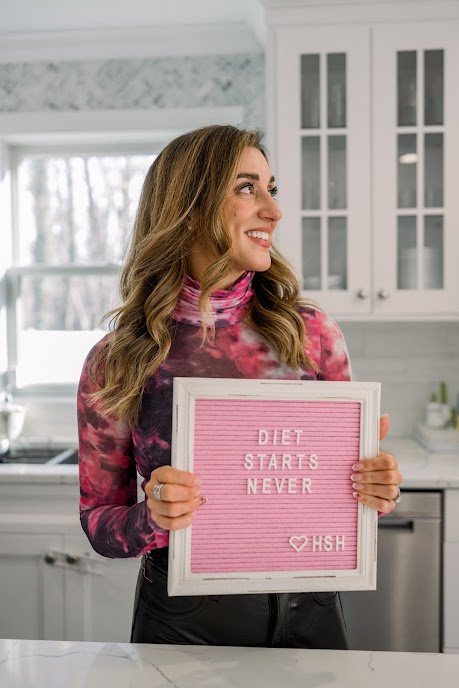
Hi, It’s Jenna Werner, owner of HSH 💗 Thanks for reading, I hope this helped you clear up the myths so you can make informed choices that are best for YOU. That’s what our purpose at Happy Strong Healthy ®️ is!