A Dietitian’s Guide to Healthy Caffeine Intake (Without Burning Out)
If you feel like you’re running on caffeine and chaos… you’re not alone. Especially this time of year and if you happen to be a mom (like me) we are thinking of the transition to summer and the crazy that ensues and the brain gymnastics are going crazy!
But this is not a time to sacrifice our health and in fact it’s a time to prioritize it even more. This blog was written in partnership with Day/Dream a new product line I am so grateful to spread the word on, a product line I have been using daily and cannot wait for you to try. So if you want it asap head to amazon now!
For a lot of busy adults, especially moms, caffeine becomes less of a choice and more of a survival tool. Morning coffee is on autopilot and it can turn into a second cup easily and then an afternoon pick-me-up, and suddenly you’re wired, tired, and still not functioning the way you want to.
…and now we’re hurting our sleep health too.
Which quite literally sets up the cycle to repeat the madness that is not helping us be our best selves or mothers.
So let’s take a facts-over-fear approach to caffeine:
How much is actually Ok?
When does it start working against you?
And what are better ways to support energy?
And like what should or can we do instead of continuing to pile in more coffee.
☕ How Much Caffeine Is Actually Safe?
According to most research and clinical guidelines, up to 400 mg of caffeine per day is considered safe for healthy adults. But this doesn’t mean it is recommended or should be consumed daily.
That’s roughly:
3–4 cups of coffee
Or 2 coffees + an energy drink
Or multiple smaller sources (tea, pre-workout, soda, etc.)
But again…
SAFE AND OPTIMAL ARE NOT THE SAME!
As a dietitian, and a mom myself, I love coffee and caffeine, but we have to have limits and parameters because:
Using caffeine to compensate for poor sleep
Riding energy highs and crashes
Dealing with anxiety, jitters, or digestive issues
Are not health promoting or helping long term.
Things to Look For:
Even if you’re not at that upper threshold, you can look for signs from your body to slow down or create some changes.
Common signs that indicate your caffeine intake may need a little change:
Midday energy crashes
Increased anxiety or feeling “wired but tired”
Poor sleep quality (even if you fall asleep fine)
Sleep disturbances or difficulty falling asleep/staying asleep
Dependency on coffee or caffeinated beverages to feel “like yourself”
Bloating or digestive discomfort
Caffeine works by blocking adenosine (a chemical that makes you feel sleepy), but it doesn’t actually fix the underlying issue, it just delays the signal.
So eventually, your body collects that “sleep pressure,” and it catches up aka you crash. And no one has time for that.
There is a safe way to consume caffeine and still allow it to support your health but piling it on is not the answer.
More Caffeine ≠ More Energy
This is where things get interesting.
Caffeine can improve:
Alertness
Reaction time
Focus (in moderate amounts)
But more is not better.
Higher intakes can:
Increase cortisol (your stress hormone)
Disrupt blood sugar balance
Interfere with sleep quality (even 6–8 hours later)
Interfere with food intake
Which creates a cycle:
Poor sleep → more caffeine → worse sleep → more caffeine
Why This Matters Even More for Busy Moms
If you’re juggling work, kids, and everything in between, caffeine often becomes the easiest solution.
But the reality is:
You don’t need more stimulation
You need more sustainable energy
And that comes from supporting your nervous system, not constantly overriding it AND finding other options to give you the energy you need.
Nutrition Integration:
The first thing to remember is that coffee is not a meal.
And your caffeine should be paired with food, especially first thing in the morning.
A strong start to the day that includes multiple food groups and colors will always be my recommendation so think pairing your caffeine with protein, fiber and a few colors for sustained energy that supports you.
Example:
Day/Dream Morning Energy mixed in water alongside:
Scrambled eggs with cottage cheese and veggies + Toast with Avocado
Cottage cheese + Berries + High Fiber Cereal + Nuts or seeds
Another reminder, coffee or caffeine is not a snack either and skipping meals will backfire for health outcomes.
Going too long without eating can impact blood sugars, increase cravings and also lead to binge/restrict cycles on top of potentially making you reach for more caffeine which we know is not the answer.
Lastly, and where Day/Dream really is going to support you even more, you must stay hydrated. Even mild dehydration can present as fatigue which could make you again want to reach for more caffeine to “fix” it.
Which is not the answer.
An afternoon slump as a working person or parent or anyone is so normal. It’s a lull in the day, it's the hours as a mom where you are bracing for the second half of the day, it's the hours at work where you are not quite at clock out time but you can see it is close. But choosing heavy caffeine here is not what we need.
Instead a snack with a little boost, aka Day/Dream midday boost with just 50mg natural caffeine to stay alert and focused without overstimulating you into the evening can help in all the ways.
And to protect your sleep try to cut back on caffeine intake as you go into the late afternoon to really optimize your precious sleep.
Now let’s talk about how Day/Dream Supports These Recommendations:
Day/Dream is carefully designed that if you took both the morning and midday in the same day you would be well under the threshold of 400mg caffeine and sitting pretty around 250mg instead which is not only still going to make you feel caffeinated, it is going to support your sleep needs too.
In addition to this, you will be increasing your water intake as the stick packs get mixed into water. The flavors pair perfectly with meals or to sip on especially mid day.
The product line brings you from Day to Dream with steady, clear energy and no spikes or crashes to energize your day without stealing your night.
To recap here, you don’t need to quit caffeine completely. But you should be aware and intentional.
Caffeine is part of our day and that is ok, but relying on it all day long can backfire.
Because feeling good shouldn’t depend on how many cups of coffee you’ve had.
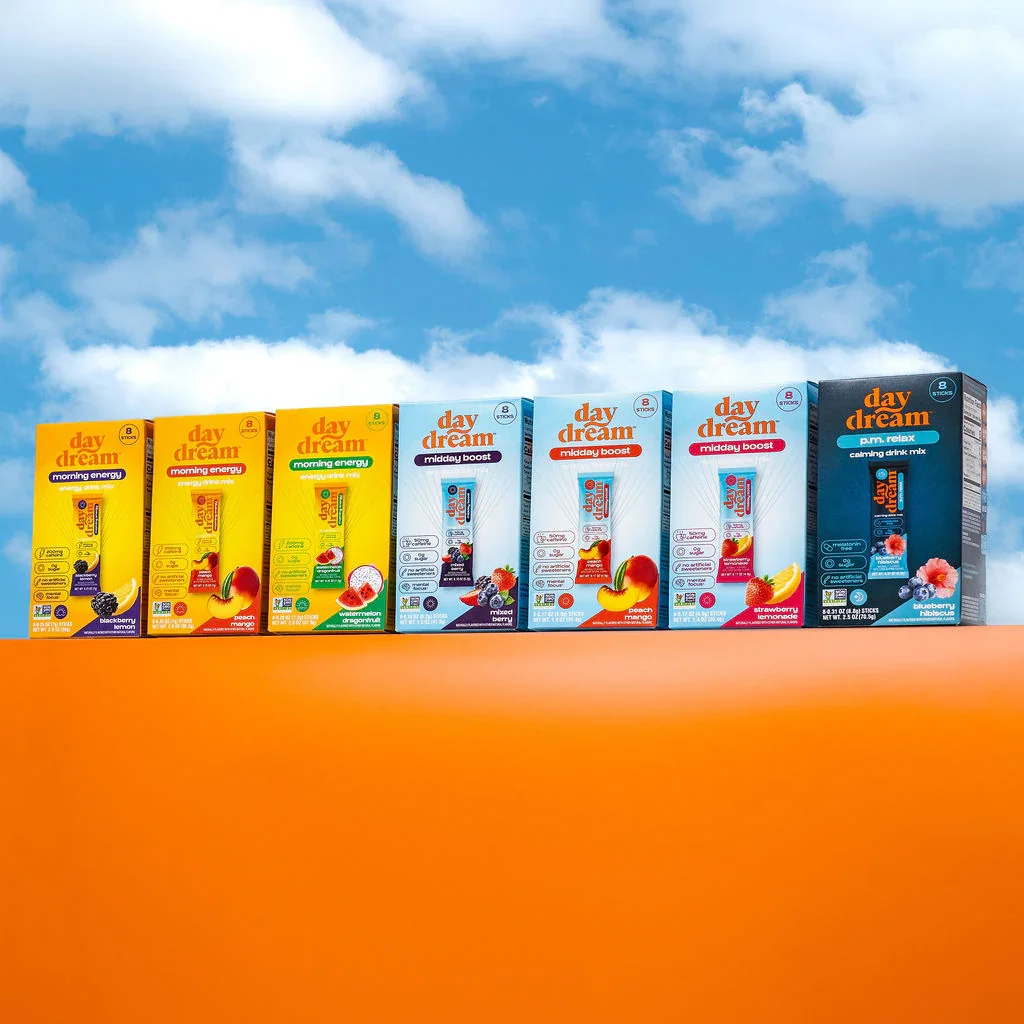
Now you can find Day/Dream on shelves at Wegmans locations and on Amazon!

Hey! It’s Jenna! Owner of Happy Strong Healthy®️, registered dietitian, mom of 3, breast cancer survivor and content creator. I am so grateful you are here and hope you find real life, facts over fear approaches to nutrition to cultivate the happiest, healthiest and strongest relationship with food, body, fitness and self.
Follow along on instagram @happystronghealthy.rd or get in touch via email: jenna@happystronghealthyrd.com